
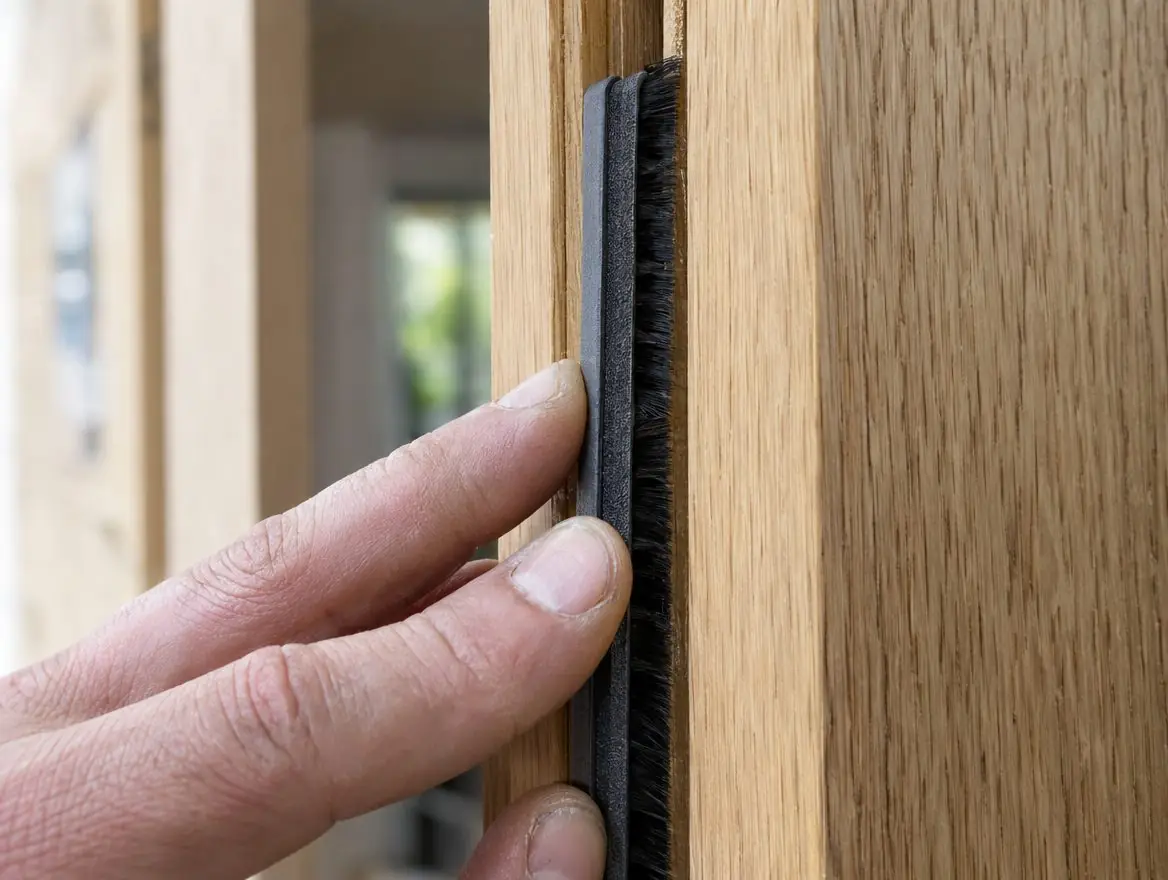
Intumescent strips swell when heated, closing the gap between a fire door and its frame during a fire. Smoke seals, usually brush or blade types, work at room temperature to limit the spread of cold smoke. Many doors need both, in the size and position the certification specifies.
Why seals fail
Seals are the most common defect on fire door inspections. They get painted over, pulled out, damaged by cleaning or simply worn by years of use. A painted brush seal no longer seals, and a strip of the wrong size may not close the gap in a fire. Our guide to seals explains the different types.
Getting the specification right
The door's certification states the type, size and position of strips and seals: in the frame or the leaf edge, single or double, and whether a combined intumescent and smoke seal is used. Replacements must match. Swapping in a generic strip from a hardware shop can undermine the door's performance.
Pads, linings and hidden protection
Fire doors also rely on intumescent material you cannot see: pads behind hinges, linings around lock bodies and glazing seals. Where these are missing or damaged, we fit the correct items as part of the work.
Specification at a glance
- Intumescent
- Expands with heat to close gaps
- Smoke seals
- Brush or blade, work at room temperature
- Combined
- Some strips do both jobs
- Position
- Frame or leaf edge, per certification
- Hidden items
- Hinge pads, lock linings, glazing seals
- Common fault
- Painted or missing seals
What's included
- Identification of the specified seals
- Removal of damaged or painted seals
- Intumescent strips in frame or leaf edge
- Brush or blade smoke seals
- Intumescent pads to hinges and locks
- Check of gaps and closing after fitting
How the installation runs
- Identify door certification and seal specification
- Remove failed seals and clean the grooves
- Fit new strips and seals to the specified positions
- Fit missing pads and lock linings
- Check the door closes and latches against the new seals
- Record the products fitted
How much does it cost?
£45 – £110 per door ex VAT
£45–£110 per door to supply and fit strips and seals, ex VAT. These are guide figures; your price is fixed after a free survey. See all guide prices or try the guide-price tool.
Questions about intumescent strips and smoke seals
Can I just add intumescent strips to an ordinary door?
No. Strips do not turn an ordinary door into a fire door. They only work as part of a door that was tested and certified with them.
Can smoke seals be painted?
No. Paint stops brush and blade seals working. If seals have been painted, they should be replaced.
Do all fire doors need smoke seals?
Only where the door is specified for smoke control, such as FD30S doors. Many doors on escape routes and flat entrances are specified this way.
How long do seals last?
It depends on use and care. Seals on busy doors wear faster. Regular inspections will show when they need replacing.