
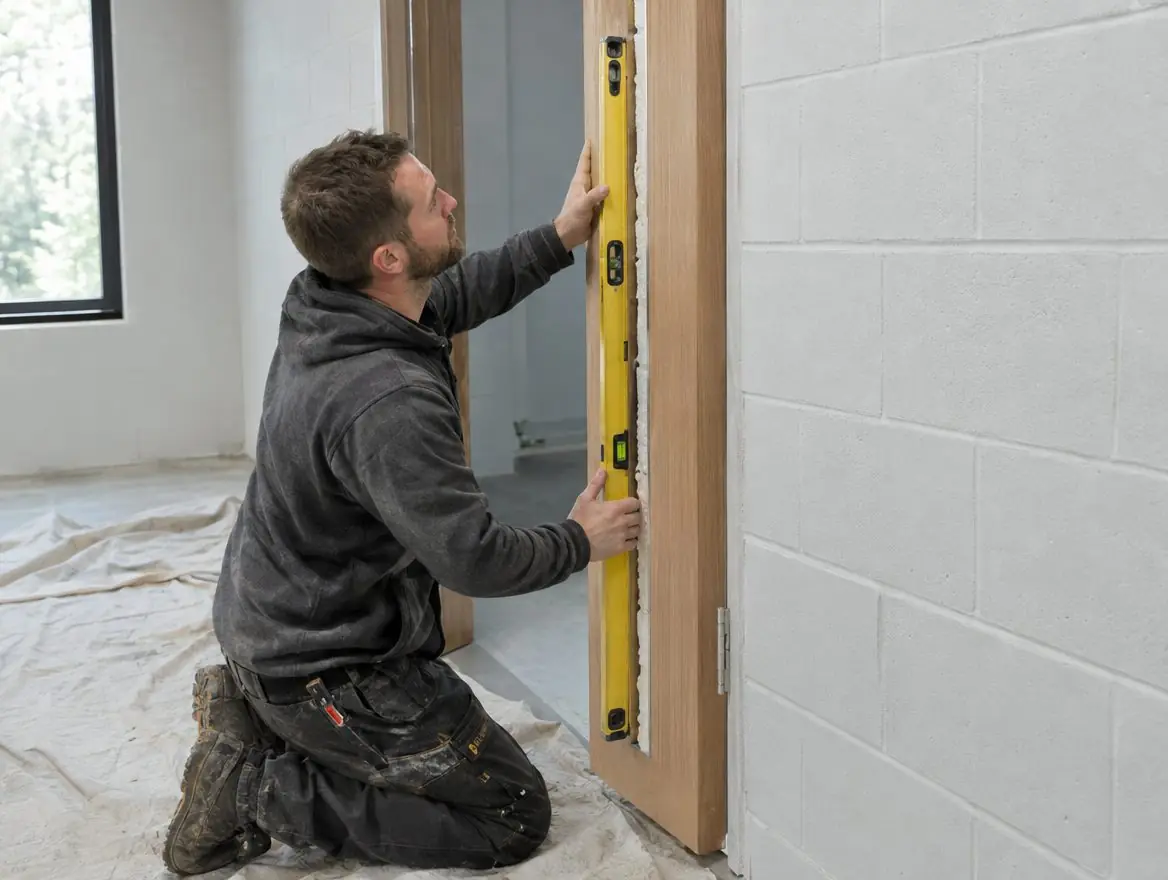
After a failed fire door inspection, review the report door by door, deal first with any door that does not close and latch or is badly damaged, then group the remaining defects into repairs and replacements. Use a competent installer, fix causes rather than symptoms, and keep photo evidence of each completed door for the fire risk assessment and records.
How do you read a fire door inspection report?
Most reports list each door by a reference and location, record the rating if it can be identified, and set out a pass or fail with a list of defects and photographs. Many also give a priority or risk rating for each door and a recommendation, such as repair, replace or monitor.
Start by checking that the door list matches the building. Missing doors, especially riser cupboards and service doors, are common. Then look at the overall picture: how many doors failed, and how many on the main escape routes? A building with a few minor defects on many doors needs a very different response from one where several flat entrance doors cannot be identified at all.
The inspector's report is evidence for the responsible person, who decides what action to take, often with the fire risk assessor. If something in the report is unclear, ask the inspector before commissioning work.
What are the most common defects?
| Defect | Why it matters | Typical remedy |
|---|---|---|
| Gaps outside the certified range | Seals may not close the gap in a fire; smoke leaks early | Fix hinges or frame, re-lip within limits, or replace |
| Damaged, missing or painted seals | Loss of smoke control or fire sealing | Replace with seals matching the evidence |
| Door does not close and latch | The door may be open in a fire | Adjust or replace the closer, realign the keep |
| Missing or wrong hinge screws | The leaf drops; gaps open; the door can fail early | Fit the correct screws or replace hinges |
| Unsuitable ironmongery | Non-tested locks, hinges or letterplates may fail | Replace with items covered by the evidence |
| Damaged leaf or frame | Holes, splits and delamination weaken the door | Approved repair where possible, otherwise replace |
| Poor or non-rated glazing | Glass or beads may fail quickly in a fire | Reglaze with the tested system or replace the leaf |
| No label or evidence | The door's performance cannot be confirmed | Trace paperwork, specialist assessment or replace |
Which doors should be dealt with first?
A simple triage helps keep attention on the doors that matter most:
- Doors that do not close or latch on escape routes and flat entrances, and any door wedged or tied open. These are the most serious because the door is effectively not there in a fire.
- Doors with holes, broken glass or missing parts that create a direct route for fire or smoke.
- Doors with significant gap or seal failures on the main escape routes.
- Unidentified or non-compliant doors in critical positions, which usually need replacement planning.
- Minor defects, such as a single missing screw or slightly worn seals, which can be grouped into a scheduled repair visit.
The fire risk assessor or responsible person may set different priorities for a specific building, and any interim measures, such as additional checks, are for them to decide.
How do you decide between repair and replacement?
Look at each door as a whole rather than defect by defect. A door with a weak closer and worn seals but a sound, labelled leaf and frame is a clear repair. A door with no label, oversized gaps, an old letterplate hole and a split frame is a clear replacement, even though each individual defect could in theory be tackled.
Ask three questions for each door. Can it be identified and matched to evidence? Can every defect be fixed within that evidence? And will the total repair cost come close to a replacement? If the answer to either of the first two is no, or the third is yes, replacement is usually the better choice. Our guides on fire door lifespan and costs help with the comparison.
What should remedial work look like?
Good remedial work fixes the cause rather than hiding the symptom. A door that does not latch might need its closer adjusted, but if the leaf has dropped on worn hinges the closer adjustment will only last a few weeks. Gaps should be corrected by realigning the leaf or frame, not by adding thicker seals or filler. Replacement components, including hinges, closers, seals and glass, should match the door's evidence.
Timing matters too. In occupied buildings, flat entrance and communal door work needs to be planned so escape routes are never left without a working door for longer than necessary, and residents need notice of access. Replacement doors are often made to order, so lead times should be factored into the programme, with interim repairs where a door cannot wait.
The installer should work from the inspection report, confirm their scope door by door, and report back on anything found during the work that the inspection missed, such as an unsealed gap behind an architrave. Our fire door repairs and fire door replacement services work in this way.
How do you evidence the work?
Evidence closes the loop between the inspection and the fire risk assessment. For each door, the record should include:
- the door reference from the inspection report
- the defects addressed and the work carried out
- before and after photos, including close-ups of hinges, seals, the closer and gaps with a gauge in place
- product details for any components fitted
- for replacements, the certification details, label photos and installation evidence for the new door
- any defects that could not be resolved and why
A re-inspection of the completed doors, by the original inspector or another competent person, provides independent confirmation. The responsible person can then update the fire risk assessment and records.
How do you stop the same defects returning?
Many defects come back because their cause was never addressed. Closers get disconnected because they are too heavy; seals get painted because decorators were not told; doors get wedged because they block a busy route. Practical fixes include setting closers carefully, briefing contractors, using hold-open devices linked to the fire alarm where doors need to stand open, and telling residents and staff why the doors matter. Regular checks, at least as often as the law or the fire risk assessment requires, then catch problems while they are still small.
Frequently asked questions
Is a failed fire door inspection a legal problem?
A failed inspection is evidence that action is needed. The responsible person must take appropriate fire safety measures under the applicable law, and ignoring known defects could leave them exposed. The report itself is not enforcement, but fire and rescue services can take action where serious risks are not addressed.
How quickly should fire door defects be fixed?
That depends on the severity and location, and the responsible person or fire risk assessor sets the timescale. Doors that do not close or latch on escape routes, or have holes or broken glass, are usually treated as urgent. Minor defects can often be scheduled into a planned repair programme.
Can the same company inspect and repair fire doors?
It happens, but many responsible persons prefer independent inspection, so the person checking the doors is not also selling the repairs. Whichever approach you choose, ask for clear door-by-door evidence of the work done, and consider having completed work re-inspected by a competent person.
What if the inspection says a door cannot be identified?
Options include tracing the original paperwork or manufacturer, commissioning a specialist assessment, or replacing the door. Where the door is in a critical position, such as a flat entrance or stair door, replacement with a certified doorset is often the most straightforward route. The responsible person decides the approach.
This guide is general information about fire doors in the UK, not legal advice. Your fire risk assessor, the responsible person or building control has the final say for your building.