
In a house in multiple occupation (HMO), fire doors protect the shared escape route from fires that start in bedrooms or kitchens. Councils commonly use the LACORS fire safety guidance, which often calls for FD30 doors with self-closers, intumescent strips and smoke seals, depending on the HMO's type and storeys.
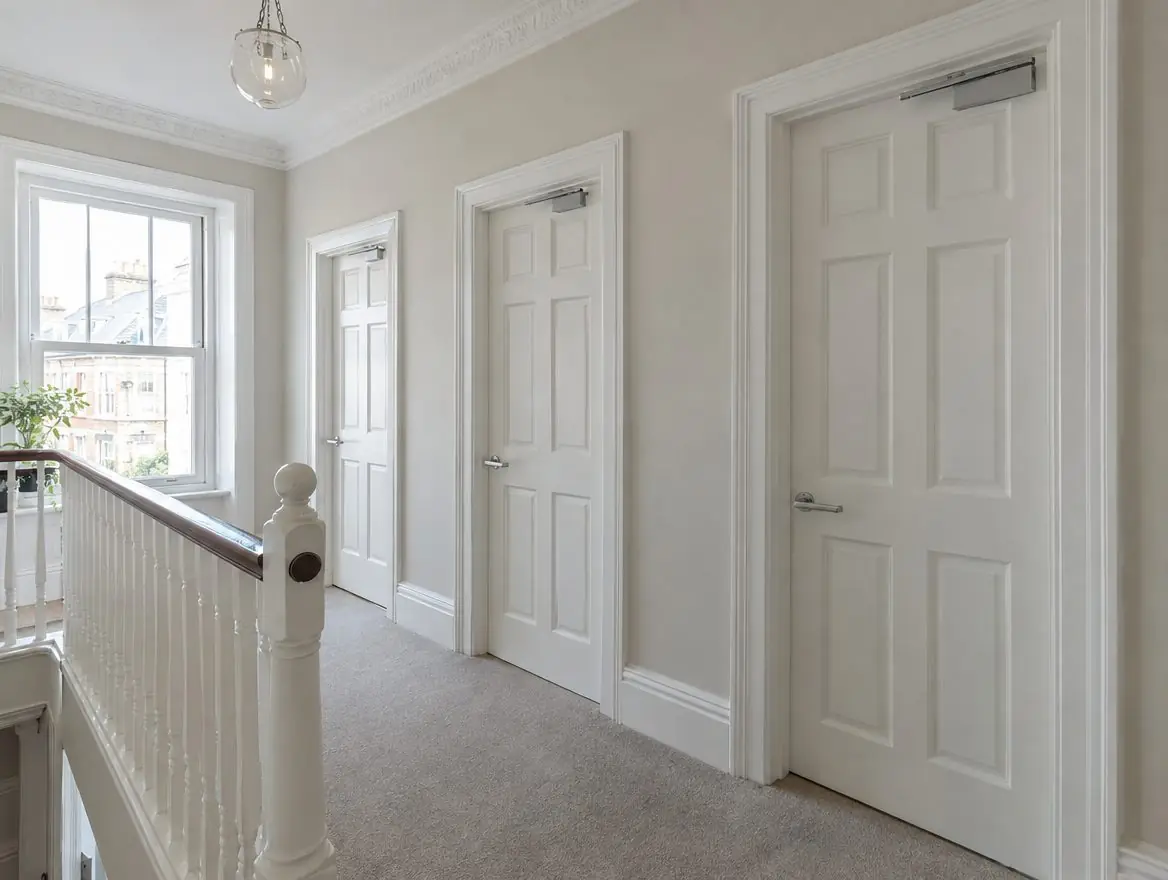
What councils typically look for
Licensing and housing officers usually look at bedroom doors, kitchen doors and any doors onto the escape stair. Common requirements include 30-minute doors, self-closers, smoke seals and well-fitted frames. Requirements vary with the size and layout of the HMO and the local authority's approach; our HMO fire door guide sets out the typical expectations.
Fitting around tenants
HMO work happens in people's homes. We agree access with you and your tenants, work room by room, and leave every bedroom lockable at the end of the day. Where thumb-turn locks are needed so occupants can get out without a key, we fit ones that are covered by the door's evidence.
Doors that keep working
HMO doors take hard use: closers get disconnected, doors get wedged and seals get painted. We set closers so they close and latch without slamming, which makes tenants less likely to defeat them, and leave you photographs and product details you can show the council.
Specification at a glance
- Typical rating
- FD30 or FD30S
- Closers
- Usually required on bedroom and kitchen doors
- Seals
- Intumescent and smoke seals
- Locks
- Escape-friendly thumb-turns where needed
- Guidance
- LACORS commonly used by councils
- Evidence
- Photos and product details
What's included
- Survey of bedroom, kitchen and stair doors
- FD30 or FD30S doors or doorsets
- Self-closers set to close without slamming
- Intumescent strips and smoke seals
- Thumb-turn locks within the evidence where needed
- Photo record for licensing and inspections
How the installation runs
- Review the council's requirements or schedule of works
- Survey each door and frame
- Agree specification and tenant access
- Fit doors, seals, closers and locks
- Test every door closes and latches
- Hand over evidence for the council
How much does it cost?
£350 – £900 ex VAT
From around £350 per door in a volume HMO job, up to £900 where frames are replaced, ex VAT. These are guide figures; your price is fixed after a free survey. See all guide prices or try the guide-price tool.
Questions about HMO fire doors
Do all doors in an HMO need to be fire doors?
Not always. Bedroom, kitchen and stair doors are the usual focus. The council's requirements depend on the HMO's size, storeys and layout.
Do HMO fire doors need closers?
In many HMOs, yes, especially on bedroom and kitchen doors. Your council's schedule of works will say which doors need them.
Can tenants lock their bedroom doors?
Yes, but they must be able to get out without a key, so thumb-turn locks on the inside are common. The lock must be covered by the door's evidence.
Can you work to a council schedule of works?
Yes. Send us the schedule and we will price each item, carry out the work and give you evidence to send back.