
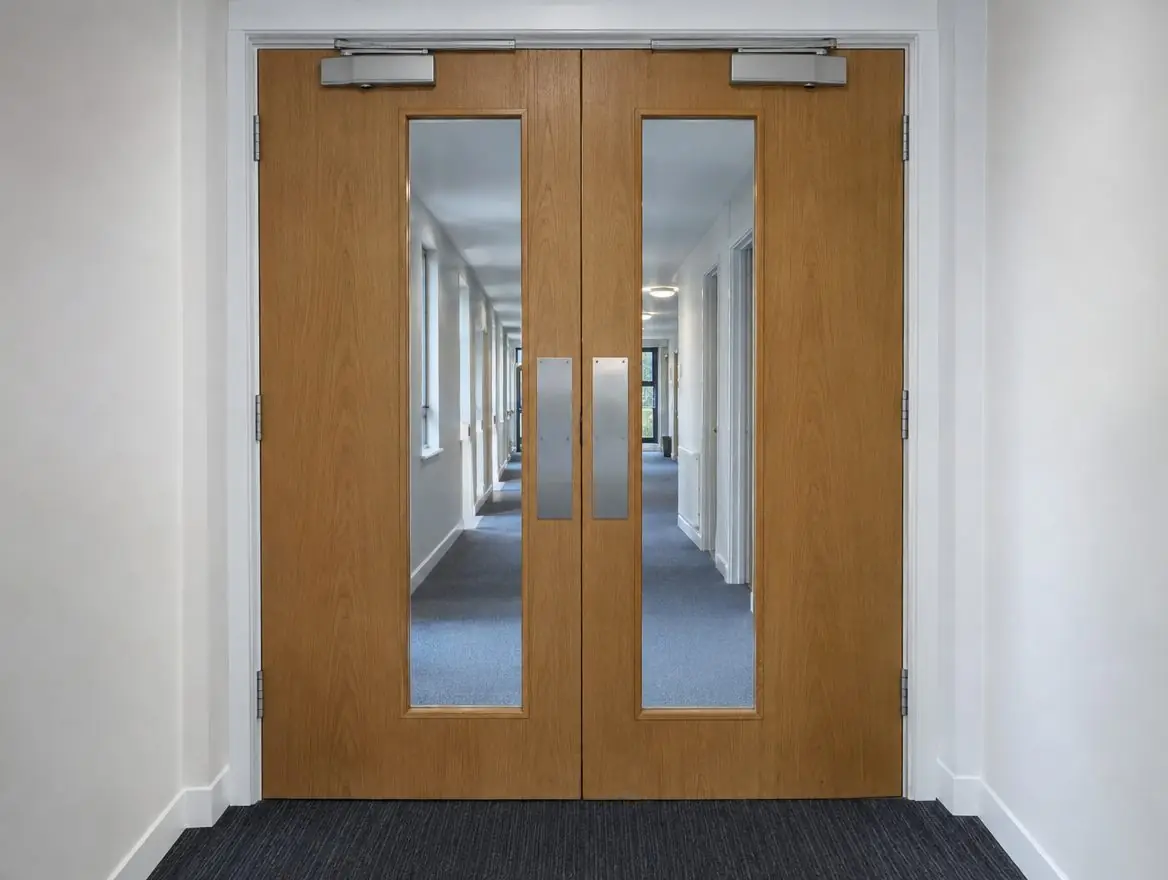
Fire door installation for hotels covers guest bedroom doors, corridor and stair doors, and back-of-house doors to kitchens, laundries and stores. Guests are asleep, unfamiliar with the building and may be disorientated at night, so every door must close and latch reliably while still looking right and running quietly in a guest-facing setting.
What makes hotel fire doors different?
Hotels combine a sleeping risk with a transient population. Guests do not know the layout, rarely read the fire notice and rely on the corridor being clear of smoke when they open their door at night. That makes the guest room door one of the most important fire doors in the building, and also one of the most abused: luggage trolleys, slamming and housekeeping props all take their toll. Back-of-house areas add commercial kitchens, laundries and linen stores, where a fire is more likely to start. Historic and listed hotels bring a further challenge, because original doors may need upgrading or sympathetic replacement agreed with the conservation officer rather than a standard modern doorset.
Who is responsible for fire safety in a hotel?
The operator is usually the responsible person under the Fire Safety Order 2005 in England and Wales, even where an investor owns the building and it runs under a management or franchise agreement. Guest houses and bed and breakfasts carry the same duty, scaled to their size. Hotels in Scotland follow the Fire (Scotland) Act 2005, and those in Northern Ireland the Fire and Rescue Services (NI) Order 2006. Brand standards from a hotel group may add requirements on top of the legal minimum, such as acoustic performance, hardware finishes or door colours.
How can doors be replaced without losing room nights?
Revenue managers will want guest rooms out of inventory for the shortest possible time. A typical approach is to survey every opening and order doorsets made to measure, then replace rooms in blocks on the quietest nights of the week or season, returning each room to sale the same day. Corridor and stair doors can be done early in the morning or overnight, one at a time. Installers working in guest areas should be briefed on the hotel's standards for noise, dress and conduct, and should never leave tools or packaging in corridors.
Which guest room door features are typical?
- FD30S fire doorsets with smoke seals, three hinges and an overhead or concealed closer that latches reliably against the electronic lock.
- A fire-rated door viewer and electronic lock, both covered by the door's test evidence.
- Acoustic and drop seals where the brand requires sound separation from the corridor.
- Connecting rooms, which usually need a fire door on each side of the shared opening.
Back-of-house doors often suit steel fire doors or heavy-duty timber with kick plates, and intumescent strips and smoke seals wear faster on kitchen doors that take trolley traffic, so check them more often.
What fire door records should a hotel keep?
Keep a register keyed to room numbers so housekeeping and maintenance can report faults quickly, and so fire risk assessors can see the specification and installation date of every door. Record product evidence for the doorset and for any locks or viewers fitted later, because a lock upgrade years after installation is a common way for evidence to be lost. Routine checks should confirm each guest room door closes fully from any angle; our installation guide shows what a correctly fitted door looks like.
What about pubs with rooms, guest houses and serviced apartments?
Smaller hospitality businesses carry the same duty with fewer staff to manage it. In a pub with letting rooms, the key risk is usually the separation between the trading areas and the bedrooms above, so the door at the foot of the stair and any door between the kitchen and the escape route deserve close attention. Guest houses in converted homes often have original panelled bedroom doors that need replacing or upgrading in line with the fire risk assessment, and owners commonly ask whether fire doors can still look traditional. They can: FD30 fire doors are available in panelled and painted styles.
Serviced apartments sit between hotel and residential use. Each apartment entrance door is treated much like a flat entrance door, and short stays mean guests know the building even less well. Work is usually booked between stays, with each door replaced and commissioned in a single visit.
Questions we're asked
Do hotel bedroom doors need to be self-closing?
Yes. Guest room doors onto corridors are normally FD30S fire doors with a self-closing device that closes and latches the door from any angle. A door that does not latch against its lock is one of the most common hotel fire door defects found during inspections.
Can we fit electronic locks to existing fire doors?
Only if the lock is tested for use on fire doors and covered by the door's evidence, with intumescent protection where the lock case is cut into the leaf. Retrofitting without that evidence can compromise the door, so electronic locks are best specified when the doorset is ordered.
How long does a hotel room door replacement take?
With a doorset made to measure, the swap itself is usually completed within a few hours, so the room can normally return to sale the same day. Frame repairs, wall making good or redecoration around the opening can extend that, so plan those rooms for quieter dates.