
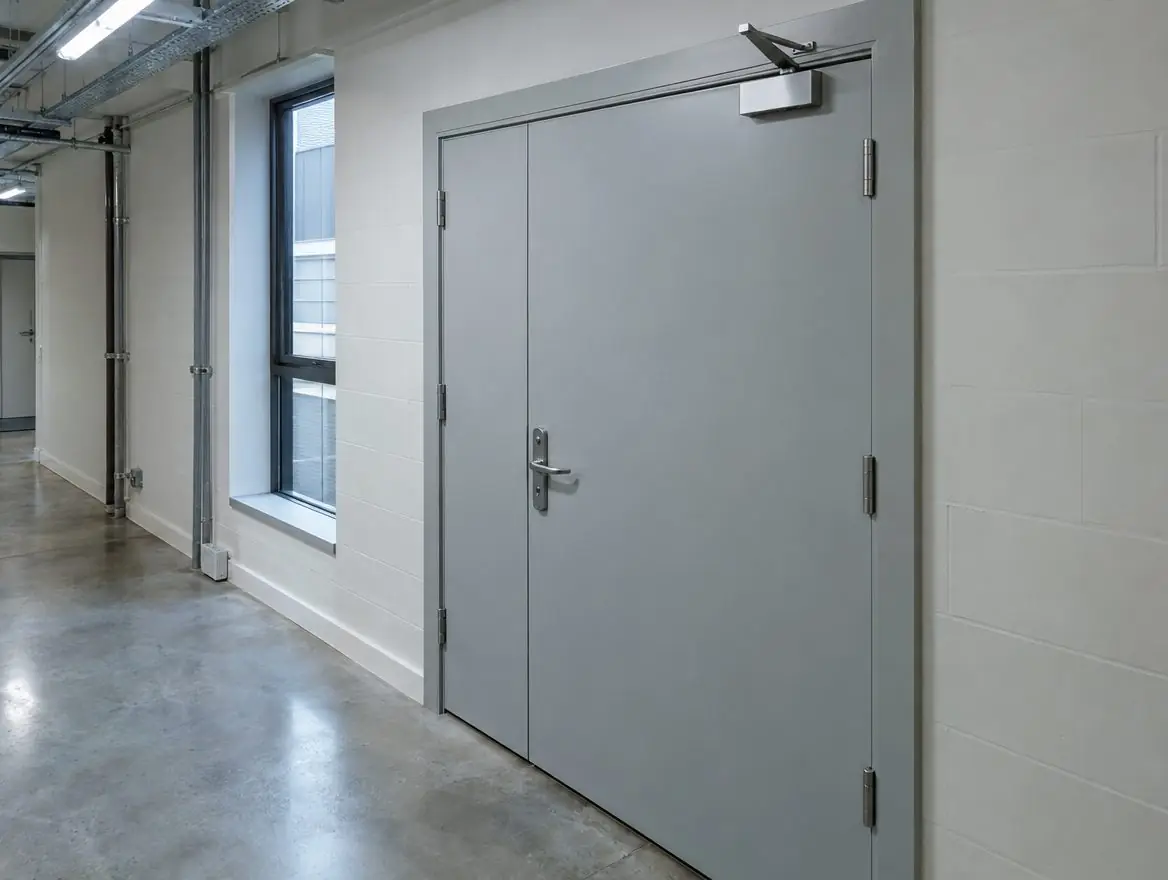
FD60 fire doors: our service in Greenwich
When you book FD60 fire doors in Greenwich, the aim is simple: doors that close, latch and seal as tested, with records that prove it.
Greenwich has a broad mix of buildings, including converted flats, student accommodation and shared houses, and the same fire door principles apply to all of them.
For FD60 work in Greenwich we generally fit certified doorsets, so frame and leaf share the same test evidence. FD60 openings in Greenwich buildings tend to be stair cores, plant rooms and bin stores in larger blocks and commercial premises.
When does a building need FD60 rather than FD30?
FD60 doors appear where the fire strategy asks a wall to resist fire for an hour: stair cores and lobbies in taller buildings, plant and boiler rooms, some service risers, refuse stores and compartment walls between different uses. The rating follows the wall. Fitting an FD30 door in a 60-minute wall leaves a weak point, and fitting FD60 everywhere wastes money and makes doors harder to open.
We work from your fire strategy, the building's drawings or the fire risk assessment. Where these disagree with what is on site, we flag it before ordering.
Each installation includes:
- Load-rated hinges and correctly powered closer
- Check of the fire strategy rating for each opening
- Intumescent and smoke seals as specified
- Certified FD60 doorset or leaf with matching evidence
Rules and responsibilities in Greenwich
The rules that apply to fire doors in Greenwich are England's. The responsible person under the Regulatory Reform (Fire Safety) Order 2005 must keep fire doors in non-domestic premises and the common parts of flats in working order; the Fire Safety Act 2021 confirmed that this includes flat entrance doors onto common parts. Enforcement of fire safety law in Greenwich sits with the London Fire Brigade.
Where a Greenwich block is above 11 metres, regulation 10 of the 2022 regulations means communal doors are checked every three months and flat entrance doors annually on a best-endeavours basis. Replacement doors must also satisfy the Building Regulations, with Approved Document B as the guidance most building control bodies work from.
Where FD60 fire doors fit in Greenwich
The need for FD60 fire doors usually arises in stair cores in taller blocks or refuse stores, and sometimes mixed-use commercial buildings. Each has its own pressures, such as residents at home or a building that must stay open, so we plan the sequence of work in Greenwich to keep escape routes protected throughout.
What happens after you enquire
- Confirm the 60-minute requirement against the fire strategy
- Survey structure, opening size and wall type
- Order the certified doorset with ironmongery to its evidence
- Install the frame, fix and seal it to the structure
- Hang, adjust and test the leaf, closer and latching
- Record evidence and make good
Budgeting for FD60 fire doors in Greenwich
If you need a budget figure first, the guide for FD60 fire doors is £850–£1,800 per FD60 doorset supplied and fitted, ex VAT. We firm that up after a survey, pricing each door separately so you can see where the money goes.
Nearby areas we cover from Greenwich
Neighbouring towns such as Blackheath, Canary Wharf, Catford and Peckham are covered too, so clients with several buildings can use one installer and one evidence format.
Common questions
Is Greenwich within your coverage area?
It is. We cover Greenwich in Greater London and neighbouring towns such as Blackheath. There is no charge for the survey.
How quickly can you survey in Greenwich?
It depends on the number of doors and access, but we offer survey dates as soon as we reply to your enquiry. If an inspection has found urgent safety issues, tell us and we'll prioritise.
Is FD60 just a thicker FD30?
No. FD60 doors are built and tested as a different product, usually with a thicker core, different seals and different ironmongery. Only the tested combination carries the 60-minute rating.
Are FD60 doors harder to open?
They are heavier, so the closer has to be chosen and adjusted with care. A well-set closer will still close and latch the door while keeping the opening force reasonable for the people who use it.