
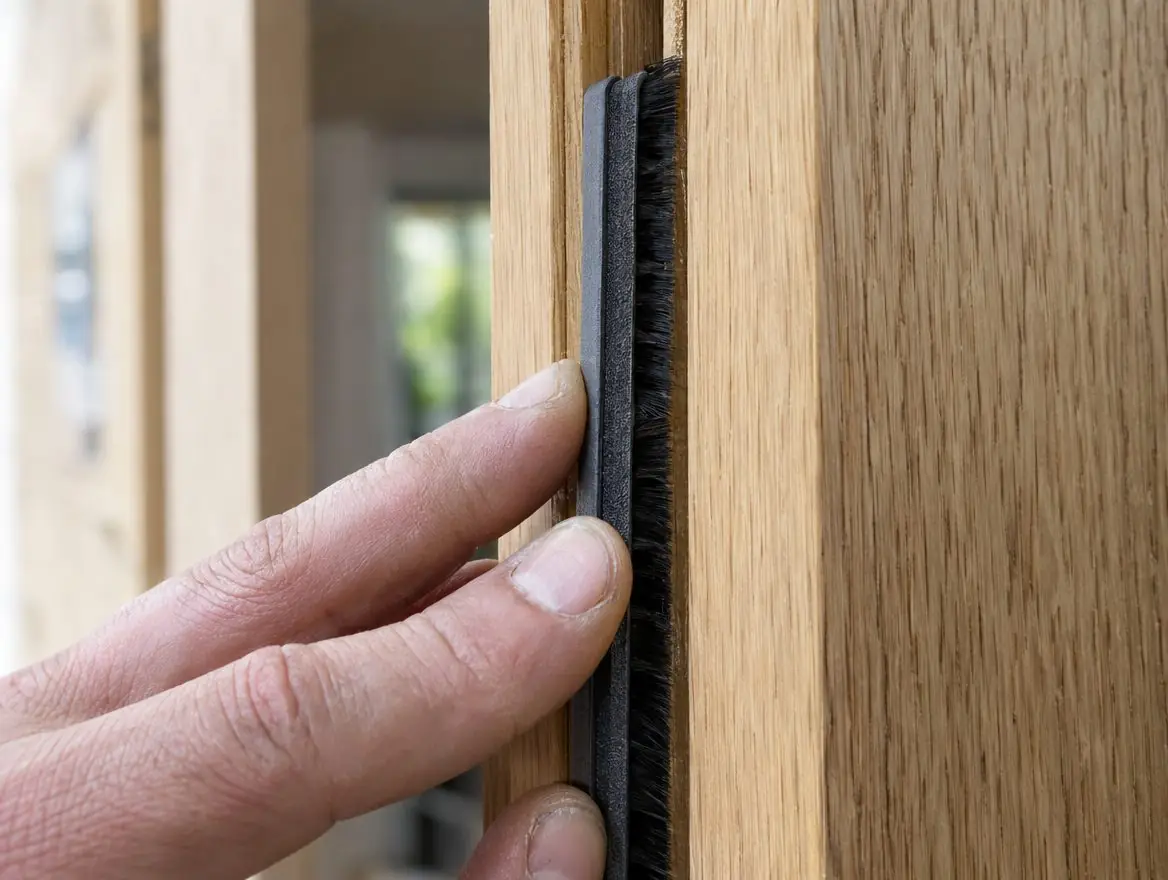
Intumescent strips and smoke seals in London, done to the evidence
Our intumescent strips and smoke seals service in London is simple: a survey, a fixed quote, certified products and an installation finished to the manufacturer's evidence.
Around London, shared houses, clinics and schools all depend on fire doors that close, latch and seal. We survey each opening and tell you plainly which doors need work and which don't.
Painted and missing seals are among the most common fire door defects nationally; in London we replace them with the type and size the certification specifies. We check that each door in your London building closes and latches against its new seals before signing it off.
Why seals fail
Seals are the most common defect on fire door inspections. They get painted over, pulled out, damaged by cleaning or simply worn by years of use. A painted brush seal no longer seals, and a strip of the wrong size may not close the gap in a fire. Our guide to seals explains the different types.
What you get:
- Check of gaps and closing after fitting
- Intumescent pads to hinges and locks
- Identification of the specified seals
- Brush or blade smoke seals
Which fire door rules apply in London?
In London, as elsewhere in England, the starting point is the Fire Safety Order 2005: whoever controls a workplace or the shared parts of a residential block must make sure its fire doors work. When doors are replaced, the Building Regulations and Approved Document B set the standard the new work has to meet. Enforcement of fire safety law in London sits with the London Fire Brigade.
Blocks above 11 metres have a specific routine under regulation 10 of the Fire Safety (England) Regulations 2022: quarterly checks of communal fire doors and annual best-endeavours checks of flat front doors. If your London building is a higher-risk building under the Building Safety Act 2022, we confirm the approval route with the Principal Accountable Person before any work is ordered.
Buildings and duty holders in London
From care homes to blocks of flats, the requirement for intumescent strips and smoke seals in London comes from the fire strategy or risk assessment for the building. We work from that document, or help you interpret your inspection report, before quoting.
How a London job runs
- Identify door certification and seal specification
- Remove failed seals and clean the grooves
- Fit new strips and seals to the specified positions
- Fit missing pads and lock linings
- Check the door closes and latches against the new seals
- Record the products fitted
Budgeting for intumescent strips and smoke seals in London
As a guide, budget £45–£110 per door to supply and fit strips and seals, ex VAT for intumescent strips and smoke seals. The figure for your London building depends on the number of doors, the rating, the condition of the frames, finishes, hardware and access. We confirm a fixed price after the free survey.
Nearby areas we cover from London
Beyond London itself we also cover nearby towns such as City of Westminster (1.4 km), Pimlico and Islington. The service, pricing and evidence are the same wherever you are.
Questions
Do you cover WC2N and nearby postcodes?
Yes. We cover London including WC2N, and nearby towns such as City of Westminster and Pimlico. The survey and written quote are free.
Do I need to be there for the survey?
Someone needs to give us access to the doors. For blocks and commercial buildings, a caretaker or site contact is fine; for HMOs and homes, we agree a time with you or your tenants.
Do all fire doors need smoke seals?
Only where the door is specified for smoke control, such as FD30S doors. Many doors on escape routes and flat entrances are specified this way.
How long do seals last?
It depends on use and care. Seals on busy doors wear faster. Regular inspections will show when they need replacing.