
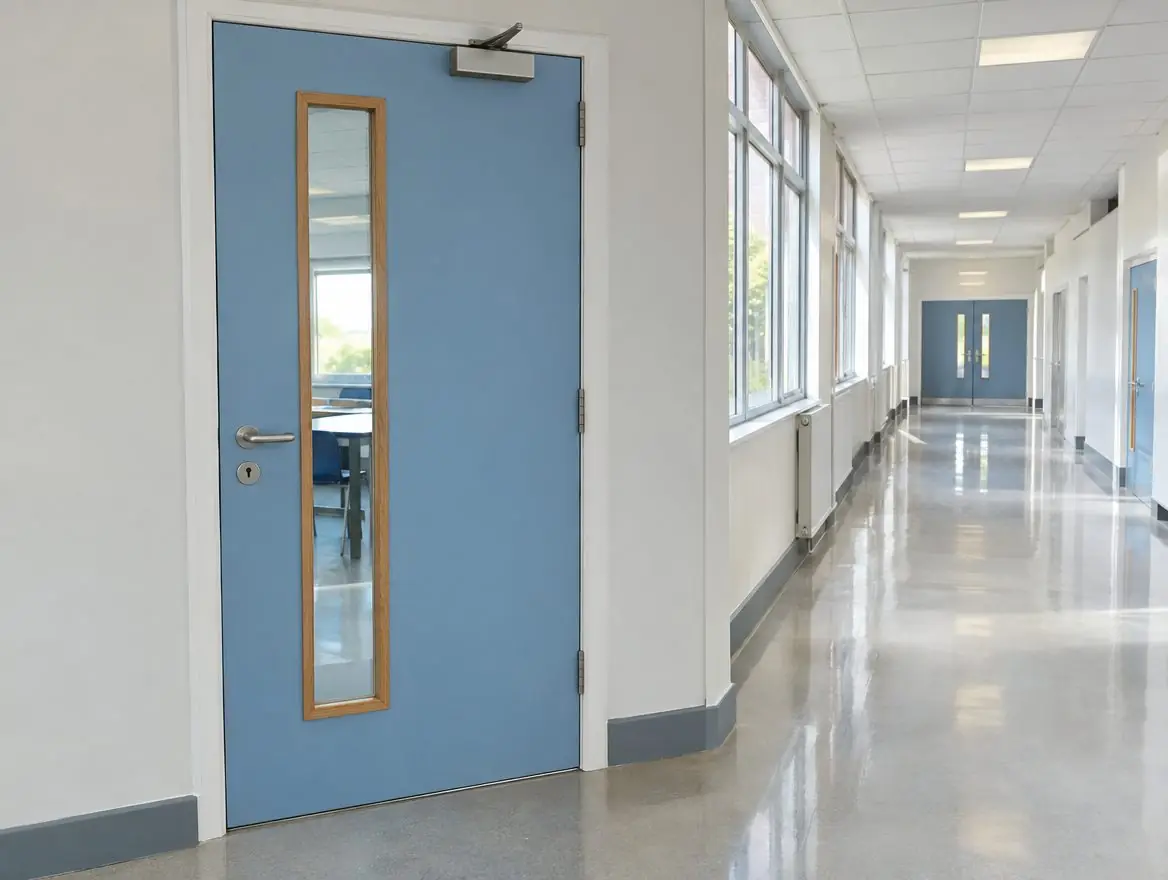
Glass in a fire door must be fire-rated glass installed as part of a tested glazing system, meaning the glass type, aperture size and position, glazing beads, fixings and intumescent glazing seals all match the door's certification or test evidence. Swapping the glass, beads or seals, or cutting a new aperture, without that evidence can let the panel fail early in a fire.
Why do fire doors have glass at all?
Vision panels let people see who is on the other side before opening a door, which reduces collisions on busy corridors and stairs. Glazing also brings borrowed light into internal lobbies and halls, and helps staff supervise spaces in schools, care homes and offices. Fully glazed or largely glazed fire doors are common in commercial buildings for the same reasons.
The trade-off is that every pane of glass is a weaker point than the solid leaf around it, so manufacturers limit how much glass a door can carry and where it can go. Those limits are set by testing, which is why they cannot be stretched on site.
Approved Document M and other guidance also encourage vision panels on doors across circulation routes for accessibility, so that wheelchair users and people opening doors with limited strength can see oncoming traffic. Fire doors can meet all of these needs, provided the glazing is part of the tested design.
What is a tested glazing system?
When a glazed fire door is tested, the specimen includes the whole glazed panel and how it is held in the leaf. The certification or test evidence then covers that combination, which typically includes:
- The glass, by type and often by product, such as a particular fire-rated wired, laminated or modified toughened glass.
- The aperture, with maximum sizes, minimum distances from the leaf edges and from other apertures, and sometimes a maximum total glazed area.
- The glazing beads, including their timber species or density, profile and size.
- The fixings, such as steel pins or screws of a given length, angle and spacing.
- The intumescent glazing seal, a strip or channel between the glass and the beads that expands in a fire and holds the glass in place.
Each of these matters. Ordinary softwood beads can char away quickly, short pins can let the beads fall out, and the wrong glazing seal can allow the glass to move or crack. The glass may be excellent and still fail if the system around it is wrong.
Can you replace broken glass in a fire door?
Yes, but only like for like, using glass and glazing components that match the door's evidence. Broken panels are often replaced with whatever a local glazier has in stock, sometimes ordinary toughened or float glass, held in with the old beads and a bead of silicone. That door may look the same but it is no longer a fire door in any reliable sense.
When glass breaks, identify the door and its certification, then source glass of the type specified and replace the glazing seal and any damaged beads at the same time. Fire-rated glass is usually marked in a corner with its product name or standard, so photograph that mark when the door is first installed. If the original specification cannot be traced, replacing the leaf or doorset may be the only way to be sure. See glazed fire doors.
Can you add a new vision panel or make one bigger?
Only where the door's certification or the manufacturer's data allows it, within the permitted sizes and positions, and using the specified glazing system. Many manufacturers require apertures to be cut in the factory or by an approved converter, because cutting through the core and edges in the wrong place can weaken the leaf. Enlarging an existing panel is treated the same way as cutting a new one.
If you need more glass than the existing door allows, the usual answer is a new leaf or doorset glazed to suit. Our guide on trimming and altering fire doors explains the wider rules on post-manufacture changes.
What about safety glazing and impact?
Fire resistance is not the only requirement. Glass in doors and in side panels near doors sits in critical locations where people may walk into it, so building regulations guidance on safety glazing applies. In England that guidance is in Approved Document K; the other nations have their own equivalents. In those locations the glass needs to break safely or resist impact.
Some fire-rated glass also meets impact safety classifications, but not all does, and traditional wired glass may not meet the safety glazing requirements for a critical location. The glass therefore has to satisfy both requirements together. A glazed door in a school, a care home or a busy corridor may also need a higher impact classification than one in an office. Your supplier should be able to confirm both the fire and safety performance of the glass.
Does glazing affect smoke control or insulation?
A properly glazed panel does not usually affect a door's smoke control, as smoke leakage is mainly a matter of the perimeter seals and threshold. Insulation is different. Many fire-rated glass products provide integrity only, and the heat passing through it can ignite materials close by or make it hard to pass the door. Where a fire strategy calls for insulation, for example on some escape routes or near stored materials, an insulating fire glass may be needed, and these products are thicker and heavier. Check with the fire strategy or the responsible person if in doubt.
What should you check on a glazed fire door?
- Is there a mark on the glass identifying it as fire-rated?
- Are the beads secure, undamaged and of the type the door's evidence describes?
- Is the intumescent glazing seal visible and continuous, not replaced with silicone?
- Is the glass free from cracks, and does it sit firmly without rattling?
- Does the aperture size and position look consistent with the door's original specification?
- Where the door is in a critical location, does the glass also meet safety glazing requirements?
Defects in glazing are a common finding in inspections. If several glazed doors in a building have the same problem, it is often more cost-effective to plan a single programme of works than to deal with them one at a time. Our fire door repairs service covers reglazing within the door's evidence.
Frequently asked questions
Can I use ordinary toughened glass in a fire door?
No. Ordinary toughened glass is designed for safety, not fire resistance, and can shatter quickly in a fire. A fire door needs fire-rated glass of the type specified in its certification, installed with the tested beads, fixings and intumescent glazing seal. Some fire-rated glasses are based on modified toughened glass, but they are specialist products.
Is Georgian wired glass still acceptable in fire doors?
Wired glass can provide fire integrity and may be part of some door certifications. It may not meet safety glazing requirements in critical locations, such as low-level panels in doors, because it can break into sharp pieces. Whether it is acceptable depends on the door's evidence and its location.
Can I put a vision panel in my flat entrance fire door?
Only if the door's certification allows an aperture of that size and position, using the specified glazing system, and usually only if the manufacturer or an approved converter does the work. Many leases also restrict alterations, so check with the freeholder or managing agent before arranging anything.
What is an intumescent glazing seal?
It is a strip or channel fitted between the glass and the glazing beads. In a fire it expands and holds the glass firmly in the frame, filling any gaps as the beads char. It must be the type and size given in the door's evidence; silicone or ordinary glazing tape is not a substitute.
This guide is general information about fire doors in the UK, not legal advice. Your fire risk assessor, the responsible person or building control has the final say for your building.