
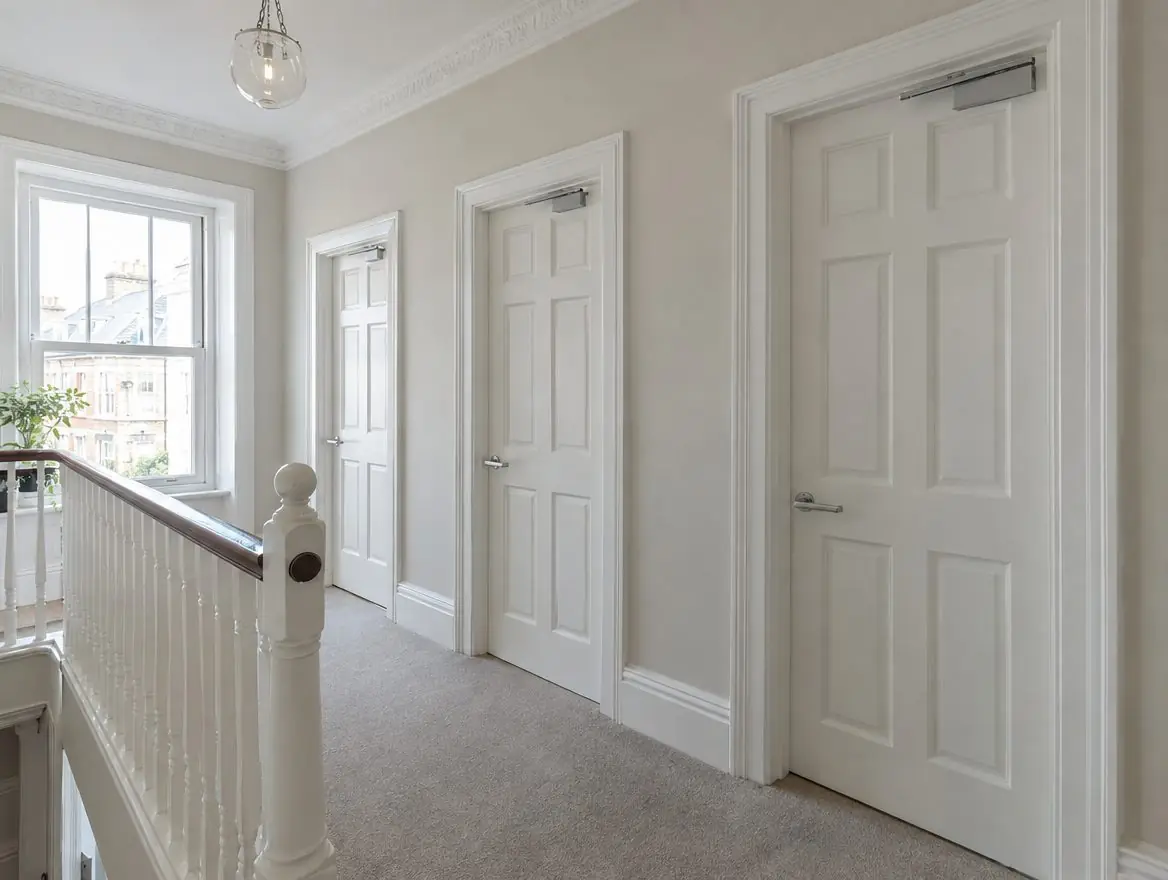
HMO fire doors in Ashton-in-Makerfield: what's involved
When you book HMO fire doors in Ashton-in-Makerfield, the aim is simple: doors that close, latch and seal as tested, with records that prove it.
In and around Ashton-in-Makerfield, fire door work covers everything from small blocks of flats to light industrial buildings. We plan each job around the people who use the building.
For HMO landlords in Ashton-in-Makerfield, fire door work often follows a licence application or a council inspection. We can price an HMO in Ashton-in-Makerfield directly from the council's schedule of works and give you evidence to send back.
What councils typically look for
Licensing and housing officers usually look at bedroom doors, kitchen doors and any doors onto the escape stair. Common requirements include 30-minute doors, self-closers, smoke seals and well-fitted frames. Requirements vary with the size and layout of the HMO and the local authority's approach; our HMO fire door guide sets out the typical expectations.
As standard, the work covers:
- FD30 or FD30S doors or doorsets
- Intumescent strips and smoke seals
- Self-closers set to close without slamming
- Survey of bedroom, kitchen and stair doors
Rules and responsibilities in Ashton-in-Makerfield
In Ashton-in-Makerfield, as elsewhere in England, the starting point is the Fire Safety Order 2005: whoever controls a workplace or the shared parts of a residential block must make sure its fire doors work. When doors are replaced, the Building Regulations and Approved Document B set the standard the new work has to meet.
Blocks above 11 metres have a specific routine under regulation 10 of the Fire Safety (England) Regulations 2022: quarterly checks of communal fire doors and annual best-endeavours checks of flat front doors. If your Ashton-in-Makerfield building is a higher-risk building under the Building Safety Act 2022, we confirm the approval route with the Principal Accountable Person before any work is ordered.
Buildings and duty holders in Ashton-in-Makerfield
Typical settings for HMO fire doors include shared houses, converted period houses and student lets. In Ashton-in-Makerfield, as anywhere, the duty holder varies: a responsible person for a workplace, a landlord or managing agent for a block or HMO, or a homeowner after building work. We adjust access, timing and paperwork to suit whoever commissions the work.
What happens after you enquire
- Review the council's requirements or schedule of works
- Survey each door and frame
- Agree specification and tenant access
- Fit doors, seals, closers and locks
- Test every door closes and latches
- Hand over evidence for the council
What does HMO fire doors cost in Ashton-in-Makerfield?
If you need a budget figure first, the guide for HMO fire doors is from around £350 per door in a volume HMO job, up to £900 where frames are replaced, ex VAT. We firm that up after a survey, pricing each door separately so you can see where the money goes.
Covering Ashton-in-Makerfield and nearby
We also cover towns near Ashton-in-Makerfield, including Golborne (3.6 km away), Newton-le-Willows and St Helens. If your building is in WN4 or a neighbouring district, the service and pricing are the same.
Questions
Do you cover WN4 and nearby postcodes?
Yes. We cover Ashton-in-Makerfield including WN4, and nearby towns such as Golborne and Newton-le-Willows. The survey and written quote are free.
How quickly can you survey in Ashton-in-Makerfield?
It depends on the number of doors and access, but we offer survey dates as soon as we reply to your enquiry. If an inspection has found urgent safety issues, tell us and we'll prioritise.
Can tenants lock their bedroom doors?
Yes, but they must be able to get out without a key, so thumb-turn locks on the inside are common. The lock must be covered by the door's evidence.
Do all doors in an HMO need to be fire doors?
Not always. Bedroom, kitchen and stair doors are the usual focus. The council's requirements depend on the HMO's size, storeys and layout.