
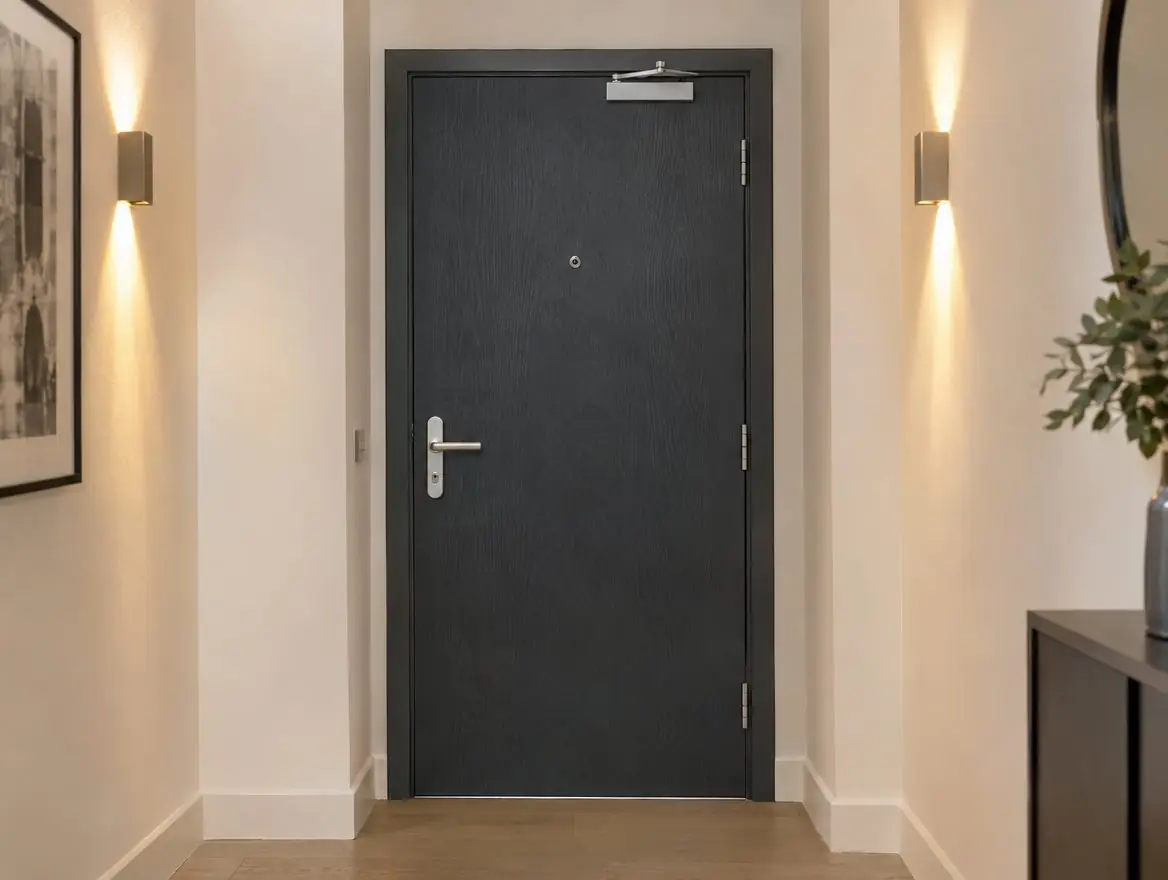
Composite fire doors in Washwood Heath: what's involved
Our composite fire doors service in Washwood Heath is simple: a survey, a fixed quote, certified products and an installation finished to the manufacturer's evidence.
Fire doors in Washwood Heath protect escape routes in care homes, houses with integral garages and small offices alike. We adapt the programme to the building and its occupants, never the standard of the installation.
We only fit composite doors in Washwood Heath in configurations covered by the product's certification. Composite doorsets are a popular option for flat entrance programmes, and in Washwood Heath they suit blocks where residents want colour choice and low maintenance.
What to check before you buy
Composite doors vary widely. The certification must cover the whole doorset as supplied: the core, skin, frame, glazing, letterplate, viewer and every item of hardware. Ask to see the certificate and the installation instructions, and check that the door's configuration, such as a side panel or glazed panel, is actually covered. BS 8214:2026 now includes maintenance guidance for composite and metal doors, reflecting how common they have become.
As standard, the work covers:
- Self-closer, smoke and intumescent seals
- Advice on certified composite products and options
- Viewer, numerals and security hardware within evidence
- Weather detailing for external deck-access doors
What the rules say for Washwood Heath
In Washwood Heath, as elsewhere in England, the starting point is the Fire Safety Order 2005: whoever controls a workplace or the shared parts of a residential block must make sure its fire doors work. When doors are replaced, the Building Regulations and Approved Document B set the standard the new work has to meet.
Blocks above 11 metres have a specific routine under regulation 10 of the Fire Safety (England) Regulations 2022: quarterly checks of communal fire doors and annual best-endeavours checks of flat front doors. If your Washwood Heath building is a higher-risk building under the Building Safety Act 2022, we confirm the approval route with the Principal Accountable Person before any work is ordered.
Where composite fire doors fit in Washwood Heath
The need for composite fire doors usually arises in purpose-built blocks of flats or housing association estates, and sometimes converted flats. Each has its own pressures, such as residents at home or a building that must stay open, so we plan the sequence of work in Washwood Heath to keep escape routes protected throughout.
From enquiry to handover in Washwood Heath
- Survey opening, threshold and exposure
- Agree colour, glazing and hardware within the certified range
- Order doorset to measure
- Remove existing door and frame
- Install, seal and adjust to the manufacturer's instructions
- Test closer and locks and hand over evidence
Prices for composite fire doors in Washwood Heath
Guide pricing for composite fire doors: £1,400–£2,600 per composite flat entrance doorset supplied and fitted, ex VAT. Volume work across several doors in one Washwood Heath building usually brings the per-door cost down. Your written quote is fixed once we have surveyed.
Around Washwood Heath
Nearby towns we cover include Aston, Birmingham and Acocks Green. Distance from Washwood Heath does not change our guide prices, and the survey and quote are free.
Questions from Washwood Heath
Do you cover B8 and nearby postcodes?
Yes. We cover Washwood Heath including B8, and nearby towns such as Aston and Birmingham. The survey and written quote are free.
How quickly can you survey in Washwood Heath?
It depends on the number of doors and access, but we offer survey dates as soon as we reply to your enquiry. If an inspection has found urgent safety issues, tell us and we'll prioritise.
Can composite fire doors face the weather?
Some are designed for external use on deck-access blocks. The product must be certified for that use and fitted with the right threshold and weather detailing.
Do composite fire doors need a closer?
Yes, as flat entrance doors they need a self-closing device that closes and latches them. This can be overhead or concealed, depending on the certified options.