
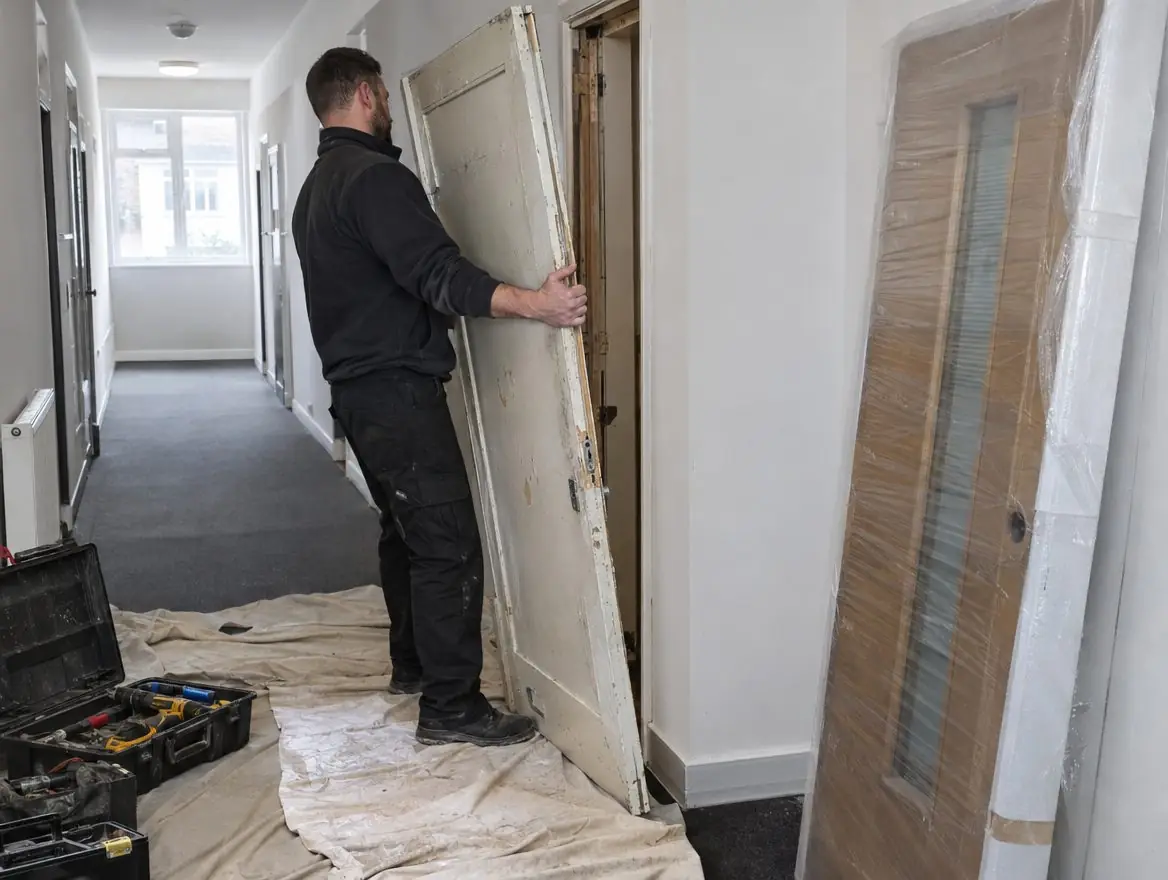
A fire door has no fixed lifespan. A well-made, properly installed door in a quiet location can remain serviceable for many years, while a heavily used communal door may need significant repairs within a few years. Its life depends on traffic, abuse, the quality of the closer and hinges, and maintenance. It stays fit for purpose only while it still matches its certification.
Why is there no fixed lifespan for a fire door?
A fire door's rating is a snapshot of how a new, correctly installed product performed in a test. It is not an expiry date. What matters for a door in service is whether it still matches the condition it was tested in: gaps within range, seals in place, hinges secure, closer working, and the leaf and frame undamaged.
Think of it the way you would think of a car's brakes rather than its paintwork. The question is not whether the door looks tired, but whether its working parts still do what they were designed to do. A scruffy door with sound seals, tight hinges and a working closer may be in better shape as a fire door than a freshly painted one with its seals painted over.
A door can lose that condition within months if it is abused, or keep it for many years if it is used gently and checked regularly. Manufacturers may give an expected service life for their products, but that figure assumes appropriate use and maintenance. In practice, the useful question is not how old a door is, but whether it would still perform today.
What wears fire doors out fastest?
- Traffic. A communal corridor door may open and close hundreds of times a day, compared with a handful for a flat entrance. Hinges, closers and latches wear in proportion.
- Impact. Trolleys, bikes, prams, bins and furniture moves damage leaves, edges and frames. Commercial and healthcare buildings see the most.
- Badly set closers. A closer that slams the door shocks the frame and hinges every time; one that is too weak leaves the door open and invites wedging.
- Wedging and propping. Doors held open with wedges or fire extinguishers bend hinges and twist leaves.
- Moisture and heat. Timber leaves near entrances, bathrooms or heat sources can swell, shrink or warp.
- Unsuitable alterations. Extra locks, cat flaps, hooks and planing all shorten a door's life as a fire door.
Which parts wear first?
| Component | Typical wear | Usual remedy |
|---|---|---|
| Hinges | Loose or missing screws, worn knuckles, a dropped leaf | Re-fix with correct screws or replace with fire-tested hinges |
| Overhead closer | Leaking oil, lost adjustment, failure to latch | Adjust, or replace with a closer to BS EN 1154 |
| Smoke seals | Flattened, torn or missing brush and blade seals | Replace with seals of the type the door's evidence allows |
| Intumescent strips | Painted over, damaged or pulled out | Replace like-for-like |
| Latch and keep | Misalignment so the door does not latch | Adjust or replace |
| Leaf and frame | Edge damage, splits, delamination, twist | Minor repair where permitted, otherwise replacement |
Most of these are routine maintenance items. Dealing with them early, through our fire door repairs service or your own maintenance contractor, is what keeps a door serviceable for longer.
How does maintenance extend a fire door's life?
Regular checks catch small problems before they become expensive ones. A loose hinge screw takes minutes to fix; left alone, it allows the leaf to drop, which damages the latch, the seals and the frame. The frequency should follow the building's legal requirements and its fire risk assessment, with busy doors checked more often. In England, residential buildings above 11 metres must have communal fire doors checked at least every three months.
BS 8214:2026 now includes maintenance guidance for metal and composite doors as well as timber. Whatever the material, a simple routine covers most of it: check the door closes and latches, look at the seals, tighten hinge and closer fixings, check gaps, and record what was found and done. Keeping spare seals and the correct hinge screws in stock helps keep repairs within the door's evidence.
When does repair make sense?
Repair is usually the right answer when the leaf and frame are sound and certified, and the faults are in replaceable components. Replacement parts should be the same type the door was certified with, or an alternative the manufacturer's data allows. Fitting a cheaper closer, a non-fire-rated hinge or a generic seal may solve the immediate problem while quietly taking the door outside its evidence. Typical examples include adjusting or replacing a closer, replacing seals, re-fixing or replacing hinges, re-aligning the keep, and correcting gaps by fixing the cause. Small edge damage can sometimes be repaired, but only with methods and materials the manufacturer allows, and filler alone is rarely appropriate on an edge that matters in a fire.
A useful test is whether the repair restores the door to the condition described in its certification. If it does, and the cost is reasonable, repair is normally the sensible choice. If the repair relies on improvisation, such as packing, filling or substitute parts, it is usually a sign the door has reached the end of its useful life as a fire door.
When is replacement the better option?
Replacement tends to be better value when:
- the door has no label or evidence and cannot be identified
- it has been trimmed below its permitted size or has oversized gaps that cannot be corrected
- the leaf is twisted, delaminated, split or holed
- the frame is damaged, loose or not suitable for the leaf
- it has non-compliant alterations such as unlisted glazing or letterplates
- repair costs would come close to the cost of a new certified doorset
- the rating needs to increase, for example from FD30 to FD60
Our guide on what to do after a failed inspection sets out a simple triage, and fire door replacement explains what a replacement involves. If you want to compare the likely cost of each route, see our guide prices.
Can a door be made to last longer from the start?
Yes, by specifying for how the door will actually be used. For high-traffic routes, choose a closer of the correct power with backcheck and a robust arm, heavy-duty hinges within the door's evidence, kick plates, and edge protection where trolleys pass. For doors that people always want open, consider hold-open devices linked to the fire alarm rather than relying on everyone to close them. Steel or composite doors can suit high-abuse locations, provided they meet the fire strategy. A slightly better specification at installation often saves several repair visits later.
Frequently asked questions
Do fire doors expire after a certain number of years?
No. A fire door does not have a statutory expiry date. It remains fit for purpose as long as it still matches its certification and is in good working order. Age matters only because wear, damage and alterations tend to build up over time, which is why regular checks are important.
How often should a fire door be checked?
It depends on the building and the door's use. In England, residential buildings above 11 metres need communal fire doors checked at least every three months and flat entrance doors at least every 12 months. Other buildings follow their fire risk assessment, with busy doors usually checked more often.
Is it cheaper to repair or replace a fire door?
Repair is usually cheaper where the leaf and frame are sound and the faults are in replaceable parts such as closers, seals and hinges. Replacement is often better value where the door is unidentified, over-trimmed, twisted or badly damaged, or where repairs would approach the cost of a new certified doorset.
Do steel fire doors last longer than timber ones?
Steel doors resist impact and moisture well, so they often suit plant rooms, service areas and high-abuse locations. They still have hinges, closers, seals and locks that wear and need checking. The right choice depends on the location, the fire strategy and how the door will be used.
This guide is general information about fire doors in the UK, not legal advice. Your fire risk assessor, the responsible person or building control has the final say for your building.