
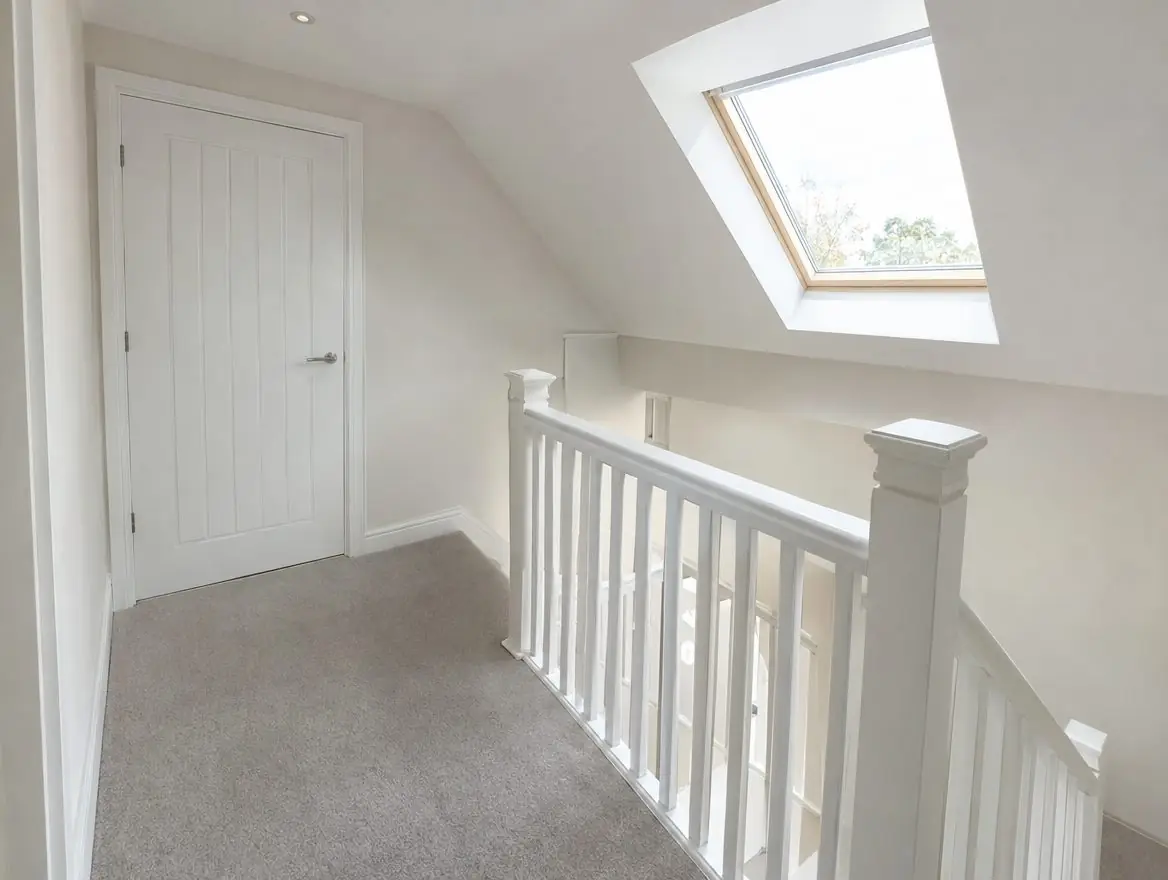
Loft conversion fire doors in Southend-on-Sea: what's involved
From the SS1 postcode district outwards, we take on loft conversion fire doors across Southend-on-Sea for homes, blocks and workplaces.
Fire doors in Southend-on-Sea protect escape routes in purpose-built blocks of flats, converted flats and care homes alike. We adapt the programme to the building and its occupants, never the standard of the installation.
For homes in Southend-on-Sea, we match fire doors to your existing style wherever certified options allow. A loft conversion in Southend-on-Sea that adds a new storey often brings a building control requirement for fire doors on rooms off the stair.
Working with your builder and building control
We can work as a subcontractor to your loft conversion builder or directly for you. We fit doors to match your existing style where certified options exist, and leave product details for building control. Wales, Scotland and Northern Ireland have their own guidance on escape from upper floors; we check which applies to your home.
As standard, the work covers:
- Product details for building control
- FD20 or FD30 doors in your chosen style
- Work coordinated with your builder
- Frame repairs or new linings where needed
Fire door law for Southend-on-Sea properties
England's framework applies in Southend-on-Sea. Approved Document B guides the fire performance of new and replacement doors under the Building Regulations 2010. Day-to-day duties sit with the responsible person under the Fire Safety Order 2005, and for multi-occupied residential buildings, the Fire Safety (England) Regulations 2022 add duties such as giving residents information about fire doors.
For blocks over 11 metres in Southend-on-Sea, those regulations require communal fire door checks at least every three months and best-endeavours flat entrance door checks each year. In higher-risk buildings, building work is overseen by the Building Safety Regulator, so we check whether approval is needed before starting.
Which buildings in Southend-on-Sea need loft conversion fire doors?
Typical settings for loft conversion fire doors include terraced houses, detached family homes and bungalows gaining an upper floor. In Southend-on-Sea, as elsewhere, the work is usually commissioned by homeowners, often alongside a builder or after a building control visit, so we fit around the household and leave the product details building control asks for.
How a Southend-on-Sea job runs
- Review the building control requirements or drawings
- Survey each door opening off the stair
- Agree door style and rating
- Fit doors, hinges and strips
- Check gaps and operation
- Hand over product details
Guide prices in Southend-on-Sea
Guide pricing for loft conversion fire doors: £300–£650 per door supplied and fitted, ex VAT. Volume work across several doors in one Southend-on-Sea building usually brings the per-door cost down. Your written quote is fixed once we have surveyed.
Around Southend-on-Sea
Beyond Southend-on-Sea itself we also cover nearby towns such as Rayleigh (9.3 km), Canvey Island and South Benfleet. The service, pricing and evidence are the same wherever you are.
Questions from Southend-on-Sea
Do you work in Southend-on-Sea?
Yes, we take on loft conversion fire doors in Southend-on-Sea and the surrounding area, including Rayleigh and Canvey Island. Send your postcode and a few details and we'll come back with survey dates.
Do I need to be there for the survey?
Someone needs to give us access to the doors. For blocks and commercial buildings, a caretaker or site contact is fine; for HMOs and homes, we agree a time with you or your tenants.
Can I just add intumescent strips to my existing doors?
Generally no. A standard internal door is not a fire door, and strips alone will not make it one. Existing doors need to be replaced with certified fire doors.
Do all my doors need to be fire doors after a loft conversion?
Usually the doors from habitable rooms onto the stair do, on every floor. Bathrooms are often excluded. Building control decides for your house.