
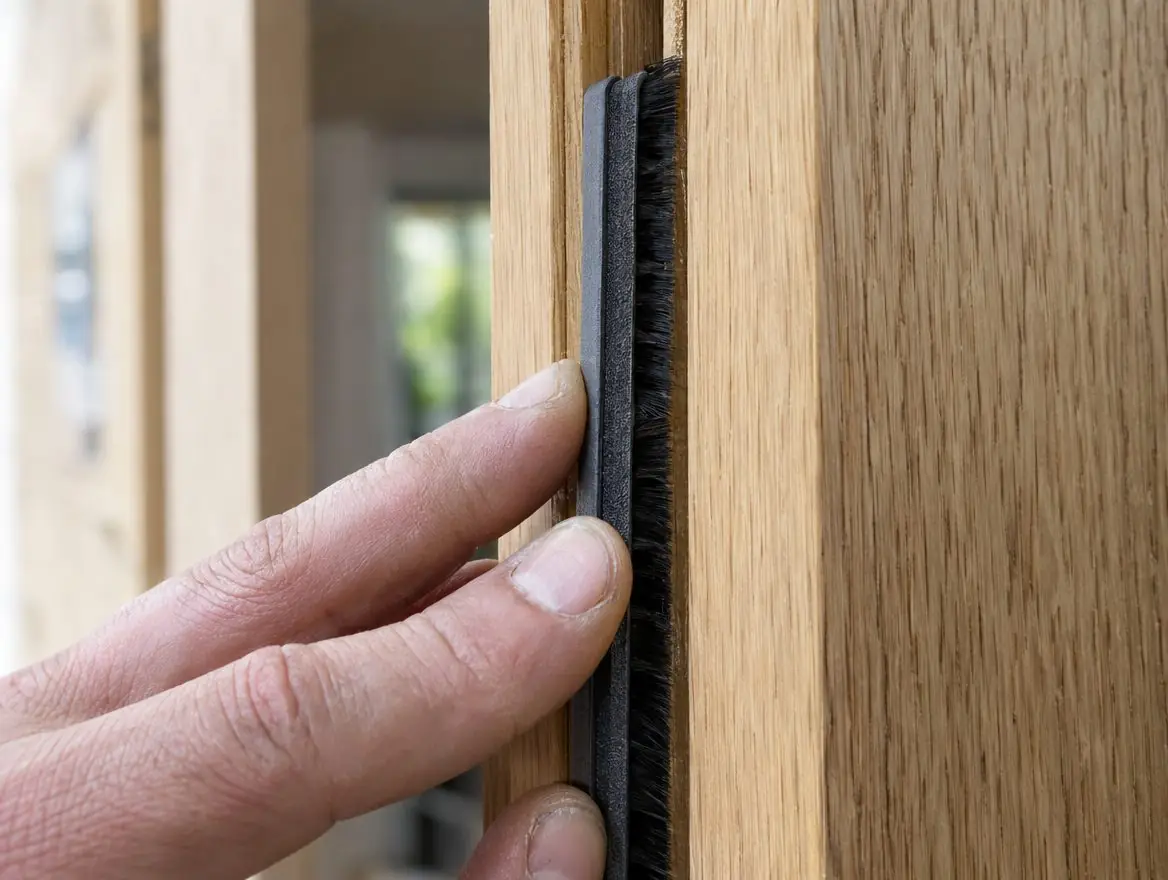
Getting intumescent strips and smoke seals right in Dunstable
If you need intumescent strips and smoke seals in Dunstable, we can survey, supply and install, then leave you the evidence your fire risk assessor will ask for.
Fire doors in Dunstable protect escape routes in care homes, houses with integral garages and high-street shops alike. We adapt the programme to the building and its occupants, never the standard of the installation.
Seal replacement in Dunstable can be combined with any other remedials on the same inspection report. We check that each door in your Dunstable building closes and latches against its new seals before signing it off.
Why seals fail
Seals are the most common defect on fire door inspections. They get painted over, pulled out, damaged by cleaning or simply worn by years of use. A painted brush seal no longer seals, and a strip of the wrong size may not close the gap in a fire. Our guide to seals explains the different types.
As standard, the work covers:
- Check of gaps and closing after fitting
- Intumescent pads to hinges and locks
- Removal of damaged or painted seals
- Identification of the specified seals
The regulations behind fire doors in Dunstable
Fire doors in Dunstable fall under English rules. New and replacement doors are covered by the Building Regulations 2010 and Approved Document B. In workplaces and the common parts of blocks, the Regulatory Reform (Fire Safety) Order 2005, as clarified by the Fire Safety Act 2021, puts the duty on the responsible person to keep fire doors suitable and maintained.
For residential buildings in Dunstable above 11 metres, regulation 10 of the Fire Safety (England) Regulations 2022 adds checks: communal fire doors at least every three months and best-endeavours checks of flat entrance doors at least every twelve months. Higher-risk buildings of at least 18 metres or seven storeys also come under the Building Safety Act 2022, where works may need approval from the Building Safety Regulator.
Where intumescent strips and smoke seals fit in Dunstable
Landlords, managing agents, facilities teams and homeowners in Dunstable can all commission intumescent strips and smoke seals from us. The usual settings are blocks of flats and HMOs, though single doors for schools are just as welcome.
Our process in Dunstable
- Identify door certification and seal specification
- Remove failed seals and clean the grooves
- Fit new strips and seals to the specified positions
- Fit missing pads and lock linings
- Check the door closes and latches against the new seals
- Record the products fitted
Budgeting for intumescent strips and smoke seals in Dunstable
Guide pricing for intumescent strips and smoke seals: £45–£110 per door to supply and fit strips and seals, ex VAT. Volume work across several doors in one Dunstable building usually brings the per-door cost down. Your written quote is fixed once we have surveyed.
Covering Dunstable and nearby
Nearby towns we cover include Luton, Leighton Buzzard and Harpenden. Distance from Dunstable does not change our guide prices, and the survey and quote are free.
Questions
Do you work in Dunstable?
Yes, we take on intumescent strips and smoke seals in Dunstable and the surrounding area, including Luton and Leighton Buzzard. Send your postcode and a few details and we'll come back with survey dates.
Do I need to be there for the survey?
Someone needs to give us access to the doors. For blocks and commercial buildings, a caretaker or site contact is fine; for HMOs and homes, we agree a time with you or your tenants.
Do all fire doors need smoke seals?
Only where the door is specified for smoke control, such as FD30S doors. Many doors on escape routes and flat entrances are specified this way.
Can smoke seals be painted?
No. Paint stops brush and blade seals working. If seals have been painted, they should be replaced.