
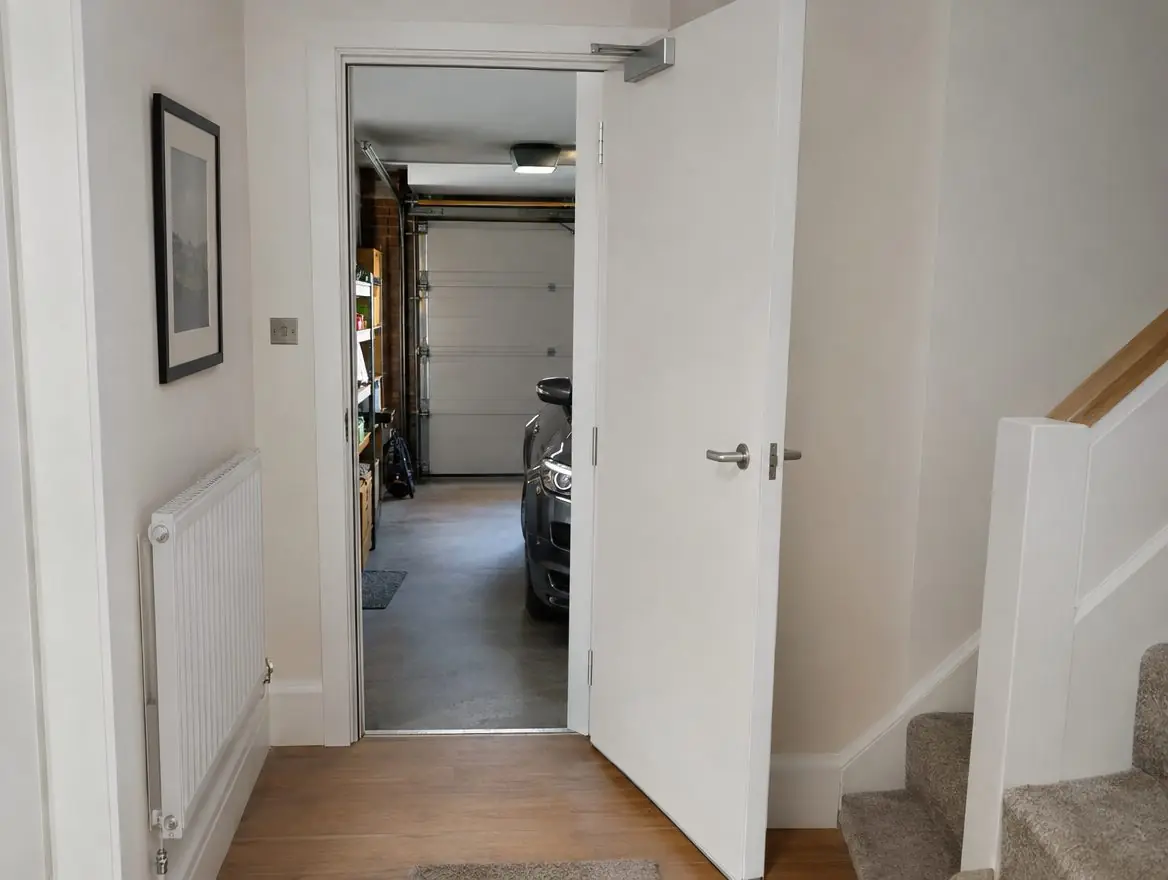
Integral garage fire doors for Wallington buildings
If you need integral garage fire doors in Wallington, we can survey, supply and install, then leave you the evidence your fire risk assessor will ask for.
Around Wallington, converted flats, care homes and clinics all depend on fire doors that close, latch and seal. We survey each opening and tell you plainly which doors need work and which don't.
We fit garage fire doors in Wallington with closers set to shut gently, so they work without slamming. If you are selling a home in Wallington, we can leave product details for your solicitor along with the door.
When you might need a new garage door
The usual triggers are building control flagging the door during a conversion or extension, a house sale survey raising it, or the discovery that the original door has been swapped for a standard internal door. Some garage conversions remove the need altogether; others create new requirements. Our guide to fire doors in houses explains when they are needed.
As standard, the work covers:
- Survey of the opening, threshold and step
- Certified FD30S door or doorset
- Self-closer set gently but positively
- Threshold detailing for smoke control
The regulations behind fire doors in Wallington
England's framework applies in Wallington. Approved Document B guides the fire performance of new and replacement doors under the Building Regulations 2010. Day-to-day duties sit with the responsible person under the Fire Safety Order 2005, and for multi-occupied residential buildings, the Fire Safety (England) Regulations 2022 add duties such as giving residents information about fire doors. Enforcement of fire safety law in Wallington sits with the London Fire Brigade.
For blocks over 11 metres in Wallington, those regulations require communal fire door checks at least every three months and best-endeavours flat entrance door checks each year. In higher-risk buildings, building work is overseen by the Building Safety Regulator, so we check whether approval is needed before starting.
Who needs integral garage fire doors in Wallington?
Typical settings for integral garage fire doors include houses with integral garages, homes being sold and new-build homes. In Wallington, as elsewhere, the work is usually commissioned by homeowners, often alongside a builder or after a building control visit, so we fit around the household and leave the product details building control asks for.
How a Wallington job runs
- Visit to measure the opening and check the frame
- Agree door style and finish
- Order certified door or doorset
- Fit door, seals and closer
- Adjust threshold and latching
- Leave product information for your records
What does integral garage fire doors cost in Wallington?
If you need a budget figure first, the guide for integral garage fire doors is £550–£1,100 supplied and fitted, depending on whether the frame is replaced, ex VAT. We firm that up after a survey, pricing each door separately so you can see where the money goes.
Wallington and neighbouring towns
Neighbouring towns such as Carshalton, Sutton, South Croydon and Purley are covered too, so clients with several buildings can use one installer and one evidence format.
Questions from Wallington
Do you work in Wallington?
Yes, we take on integral garage fire doors in Wallington and the surrounding area, including Carshalton and Sutton. Send your postcode and a few details and we'll come back with survey dates.
Can you work from an existing inspection report for my Wallington building?
Yes. Send it over and we can often price straight from it, then confirm on site. We report back against the same door references so you can close actions off.
Does the garage door need a closer?
Building control will normally expect the door between an integral garage and the house to be self-closing. We fit closers that shut and latch the door gently.
Does my garage door need to be a fire door?
If the garage is integral to the house, Approved Document B in England expects the connecting door to be a fire door with smoke control. Requirements in Wales, Scotland and Northern Ireland are similar in purpose but set out in their own guidance.