
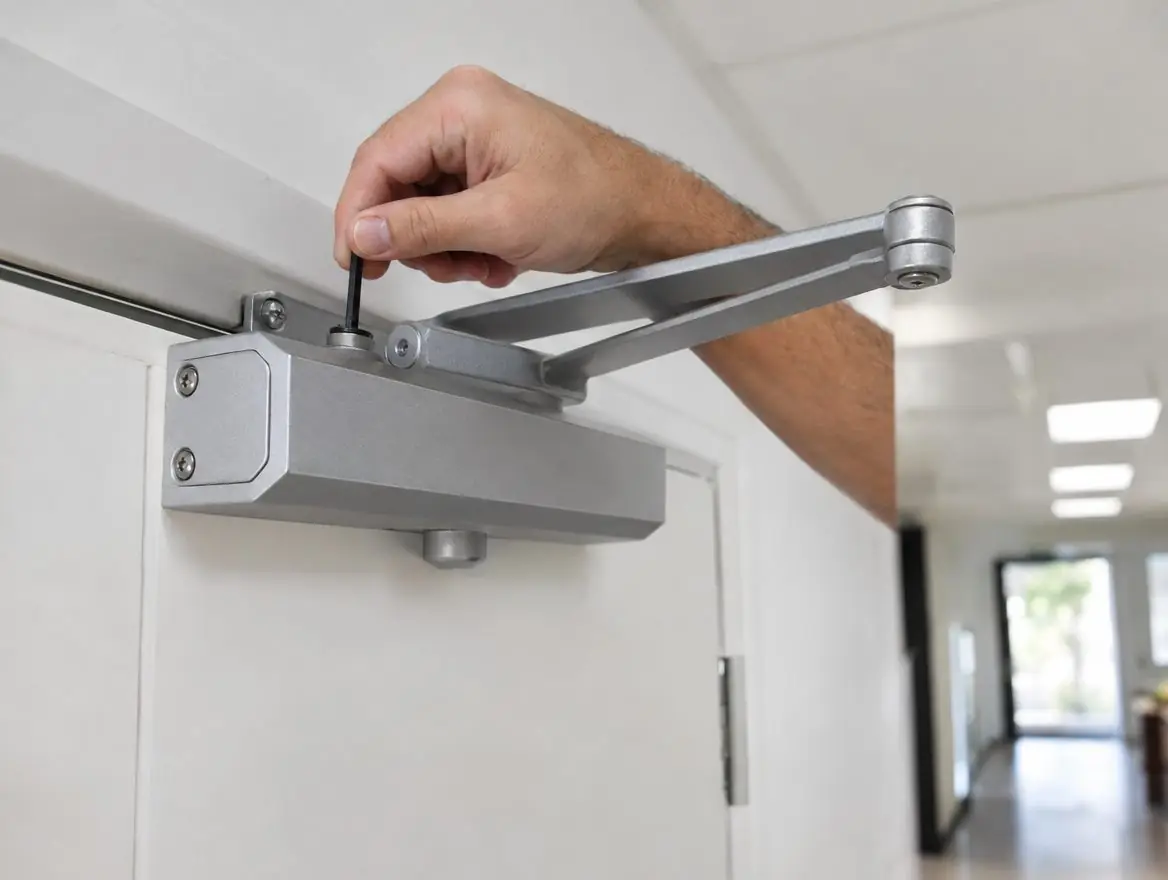
Getting fire door closers right in Cirencester
From the GL7 postcode district outwards, we take on fire door closers across Cirencester for homes, blocks and workplaces.
Fire doors in Cirencester protect escape routes in schools, care homes and houses with integral garages alike. We adapt the programme to the building and its occupants, never the standard of the installation.
A closer that fails to latch the door is one of the first things we put right on Cirencester fire doors. We set closers in Cirencester buildings so doors close fully without becoming too heavy to open.
Overhead, concealed or free-swing
Overhead closers are the most common and easiest to maintain. Concealed closers keep a clean look and deter tampering, if covered by the door's evidence. Free-swing closers let a door move freely in everyday use and close when the fire alarm sounds, which is useful in care homes and for people who find doors hard to open.
Each installation includes:
- Assessment of door size, weight and use
- Overhead, concealed or free-swing options
- Correctly powered closer to BS EN 1154
- Adjustment of speed, latching and backcheck
The regulations behind fire doors in Cirencester
England's framework applies in Cirencester. Approved Document B guides the fire performance of new and replacement doors under the Building Regulations 2010. Day-to-day duties sit with the responsible person under the Fire Safety Order 2005, and for multi-occupied residential buildings, the Fire Safety (England) Regulations 2022 add duties such as giving residents information about fire doors.
For blocks over 11 metres in Cirencester, those regulations require communal fire door checks at least every three months and best-endeavours flat entrance door checks each year. In higher-risk buildings, building work is overseen by the Building Safety Regulator, so we check whether approval is needed before starting.
Where fire door closers fit in Cirencester
The need for fire door closers usually arises in offices or HMOs, and sometimes blocks of flats. Each has its own pressures, such as residents at home or a building that must stay open, so we plan the sequence of work in Cirencester to keep escape routes protected throughout.
What happens after you enquire
- Check the door, frame and existing closer
- Select a closer suited to the leaf and use
- Fit to the template and the door's evidence
- Adjust closing and latching speeds
- Test from wide and small opening angles
- Record the closer and its settings
Guide prices in Cirencester
If you need a budget figure first, the guide for fire door closers is £90–£220 per closer supplied and fitted; adjustment visits from £195, ex VAT. We firm that up after a survey, pricing each door separately so you can see where the money goes.
Covering Cirencester and nearby
Nearby towns we cover include Stroud, Cheltenham and Swindon. Distance from Cirencester does not change our guide prices, and the survey and quote are free.
Questions from Cirencester
Is Cirencester within your coverage area?
It is. We cover Cirencester in Gloucestershire and neighbouring towns such as Stroud. There is no charge for the survey.
Can you work from an existing inspection report for my Cirencester building?
Yes. Send it over and we can often price straight from it, then confirm on site. We report back against the same door references so you can close actions off.
Do all fire doors need closers?
Most do. Exceptions include some doors kept locked shut and some doors within houses, depending on the fire strategy.
What is a free-swing closer?
A closer that lets the door swing freely in normal use and closes it when the fire alarm operates. It suits care settings and people who find doors heavy.